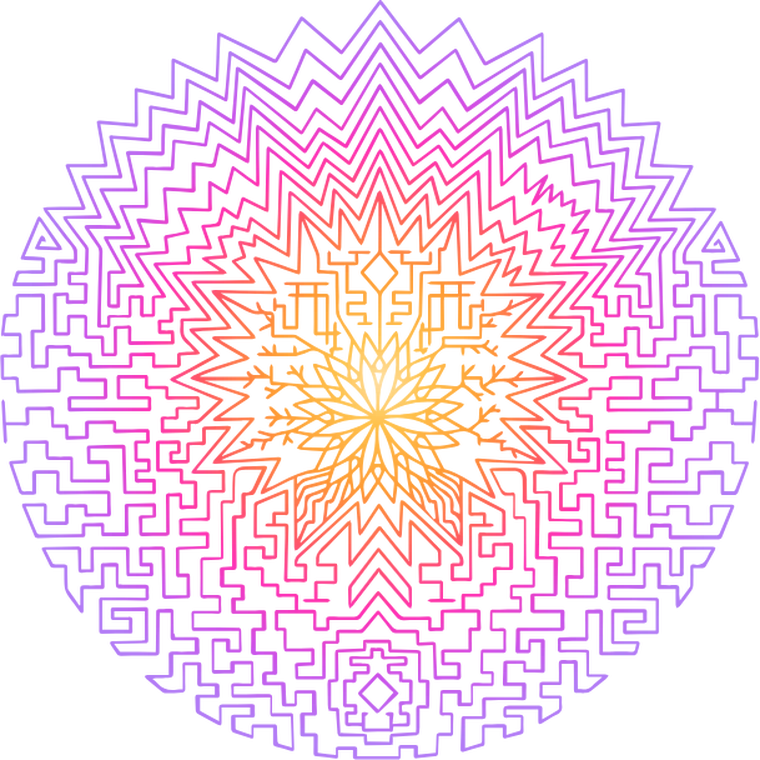
Pushed away: Eggplant (I)
“Someone had to be the grown-up, and it was never going to be anyone else.”
It takes the weight before anyone asks, and turns down the softness that would make the weight shareable, since care offered to it reads either as a trap or as a bill arriving later. Underneath is a childhood in which the mothering ran out early and the child filled the gap, learning that needing was the one thing the household could not absorb. What it asks for is the experiment of being held instead of holding, in a room where nothing is expected back.
It echoes Shu, the Egyptian air-god who stands forever between earth and sky, holding the mother apart so the world can keep its shape. The form implies a task: to discover whether the sky actually falls when the arms come down.
What is the "Pushed away: Eggplant (I)" pattern?
It takes the weight before anyone asks, and turns down the softness that would make the weight shareable, since care offered to it reads either as a trap or as a bill arriving later. Underneath is a childhood in which the mothering ran out early and the child filled the gap, learning that needing was the one thing the household could not absorb. What it asks for is the experiment of being held instead of holding, in a room where nothing is expected back.
What does "Pushed away: Eggplant (I)" sound like when it shows up?
Someone had to be the grown-up, and it was never going to be anyone else.
What is the archetypal form of "Pushed away: Eggplant (I)"?
It echoes Shu, the Egyptian air-god who stands forever between earth and sky, holding the mother apart so the world can keep its shape. The form implies a task: to discover whether the sky actually falls when the arms come down.
want to see your own?
create your cipherspace — free.want to work with it over time?
upgrade to the field.This is a pattern. Not a verdict.
It appears in many lives.